By Michael Guymon, President and CEO, SQA Services
Presented at ASQ Collaboration on Quality in the Space & Defense Industries Forum
The Industry Is Moving, With or Without You
AI in aerospace quality is no longer a future concept. It is actively reshaping how aerospace and defense organizations design, manufacture, and control complex systems. The question is no longer whether these technologies will have an impact. It is how quickly organizations will adapt and whether quality functions will evolve alongside them.
As quality leaders, the choice is becoming increasingly clear. Organizations can resist adoption due to risk and uncertainty, or they can engage early and help shape how these systems are implemented. The companies that succeed will not be the ones waiting for perfect clarity. They will be the ones embedding quality and control into systems as they evolve.
We Are Operating in an Exponential Environment
For most of history, technological progress moved at a steady, predictable pace. That model no longer applies.
Today, innovation cycles are compressed, and capabilities evolve continuously. Competitive gaps widen faster than they can be closed. In this environment, late adoption is no longer just a disadvantage. It becomes a structural failure mode.
For organizations focused on aerospace quality transformation, waiting introduces risk. By the time clarity arrives, competitors have already moved forward.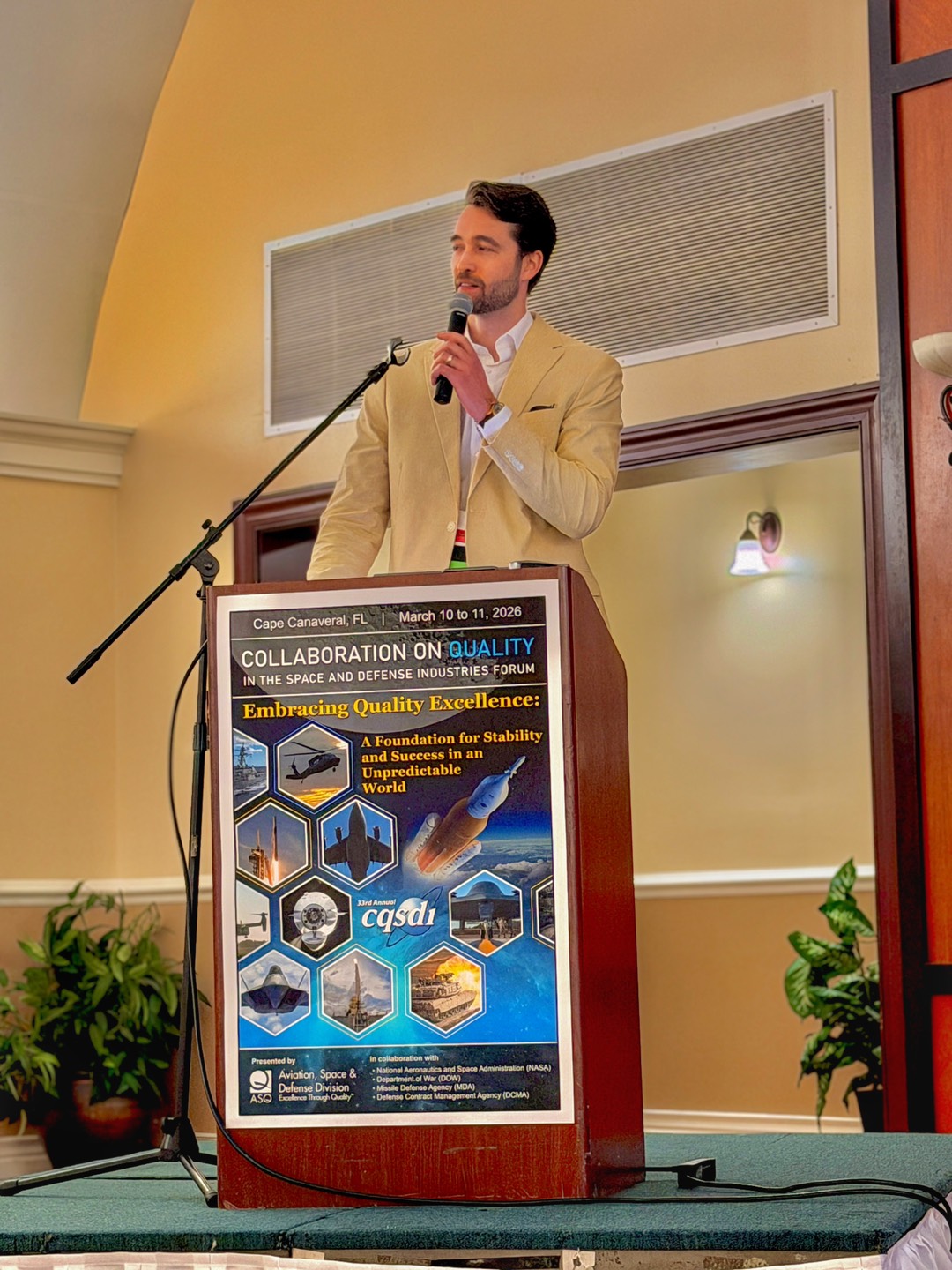
AI Is Already Reshaping Aerospace Operations
AI in aerospace quality is already being applied across critical operations. It is accelerating engineering design cycles, enhancing inspection through advanced vision systems, and enabling real-time decision making in manufacturing environments.
In many cases, AI is no longer just supporting execution. It is becoming the system that drives execution. This shift is particularly relevant in AI in aerospace manufacturing, where real-time data and automation are redefining production workflows.
For quality organizations, this creates a new challenge. Traditional oversight models were not designed for systems that evolve dynamically.
The Problem: Inspection-Based Quality Models Are Breaking
Most aerospace quality systems still rely on inspection and verification. These approaches focus on validating outputs and detecting defects after they occur.
This model was effective in stable, predictable environments. However, modern manufacturing systems are dynamic and data driven. Inputs change in real time, and processes are continuously influenced by new information.
In this context, inspection alone is no longer sufficient. Inspection versus prevention in aerospace is becoming a defining challenge. Quality cannot be inspected in at the end. It must be built into the process itself.
Rethinking the Shop Floor: AI-Driven, Context-Aware Execution
A typical work instruction such as “drill holes per drawing” highlights the limitations of traditional systems. These instructions rely heavily on interpretation and assume that all relevant information is known and applied correctly.
AI enables a different approach. Instead of static instructions, organizations can implement context-aware systems that pull requirements directly from engineering data, identify applicable specifications, and incorporate real-time inputs such as tooling constraints or defect trends.
This is where intelligent manufacturing in aerospace begins to take shape. Execution becomes more precise, more consistent, and less dependent on manual interpretation.
From Assistance to Orchestration in Aerospace Quality
The transition to AI-driven quality does not happen all at once. It evolves in stages.
Initially, AI improves clarity by extracting key information and reducing ambiguity. Over time, it enables workflow automation by organizing requirements into structured steps. As systems mature, AI begins to orchestrate processes by connecting requirements, generating supplemental operations, and aligning execution with engineering intent.
This progression represents a broader shift in digital quality systems in aerospace, where technology is not just supporting work but actively shaping it.
The End State: Real-Time, Adaptive Aerospace Quality Systems
The long-term vision for AI in aerospace quality is a real-time, adaptive system that continuously responds to changing conditions.
In this environment, work instructions evolve alongside engineering updates, adjust based on operator expertise, and incorporate insights from production performance. The focus shifts to delivering clear, relevant information while eliminating noise.
This is a core component of modern aerospace quality transformation. It enables organizations to improve consistency, reduce variability, and enhance overall system control.
Why AI in Aerospace Quality Must Move Upstream
This transformation changes the role of quality entirely. Instead of functioning as a downstream checkpoint, quality becomes embedded within execution.
This includes aligning engineering intent with manufacturing processes, integrating controls directly into workflows, and enabling real-time feedback loops across systems. The goal is to prevent defects before they occur rather than detecting them afterward.
For organizations focused on supplier quality in aerospace, this upstream integration is critical. It ensures that quality is consistent not only within internal operations but across the entire supply chain.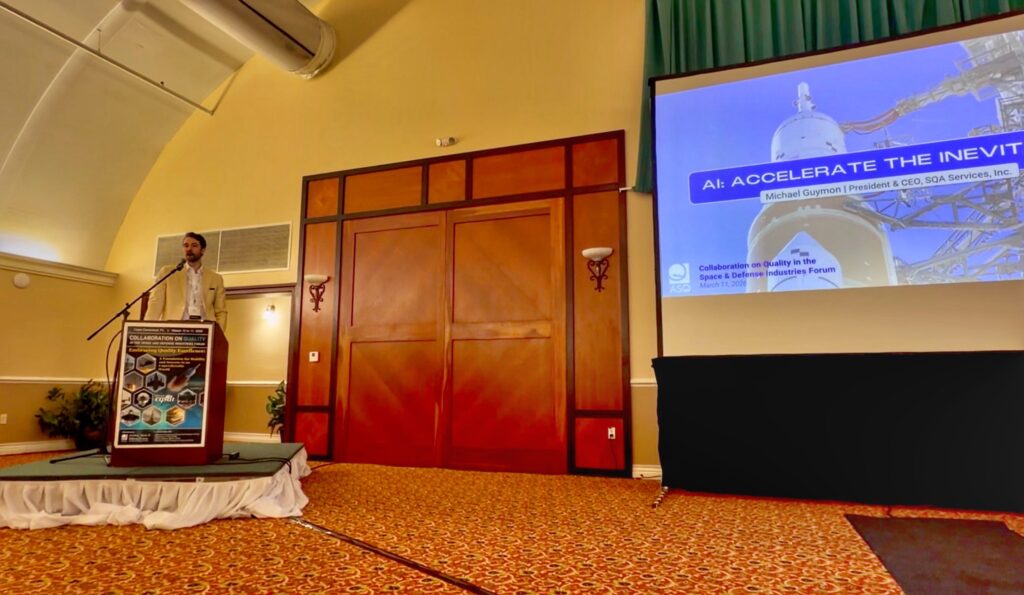
Progress Over Perfection
No organization has fully achieved this end state. Even the most advanced aerospace manufacturers still rely on human oversight for safety and accountability.
The focus should be on steady progress. Incremental improvements in automation, data integration, and process control can significantly enhance performance over time. This approach allows organizations to build capability while managing risk.
Practical Steps to Advance AI in Aerospace Quality
Organizations looking to advance AI adoption should begin by creating controlled environments where teams can experiment safely. This enables learning without introducing unnecessary risk.
Focusing on small, targeted improvements is equally important. Enhancing work instructions, reducing ambiguity, and automating repetitive tasks can deliver immediate value while building momentum.
Leaders must also engage directly with AI tools. Hands-on experience is essential for understanding how these systems can be applied effectively within aerospace environments.
Final Thought: Accelerate AI in Aerospace Quality with Control
AI adoption in aerospace quality is already underway. Organizations must decide whether they will react to change or actively shape it.
Quality leaders play a critical role in this transition. By embedding control into evolving systems, they can ensure that innovation happens with structure, discipline, and intent.
The objective is not simply to keep pace. It is to lead the next phase of AI in aerospace quality with confidence.