In life sciences, a well-executed CAPA (Corrective and Preventive Action) system is one of the strongest indicators of a mature quality organization. Yet one of the most common and costly failures in CAPA execution is the inability to clearly distinguish between contributing causes and the true root cause of a problem.
Organizations often invest significant time and resources implementing corrective actions, only to see the same issues resurface months later. When this happens, the CAPA did not fail because actions were poorly implemented; it failed because the wrong cause was addressed. Sustainable improvement depends on identifying and correcting the fundamental reason the failure occurred, not just the factors that made it worse.
Root Cause vs. Contributing Cause: Why the Difference Matters in CAPA
Before selecting tools or launching an investigation, it is critical to align on definitions.
A root cause is the single most fundamental reason a failure occurred. If it is removed or effectively controlled, the problem will not recur under normal operating conditions. In contrast, a contributing cause is a condition that influenced or exacerbated the failure but, on its own, would not have caused the issue to occur.
A simple litmus test is often helpful: If this cause were eliminated, would the problem still have occurred? If the answer is yes, the cause is contributory, not the root cause. Confusing the two leads to CAPAs that appear complete on paper but fail in practice.
Step 1: Structuring the Problem Using the 7Ms
The Fishbone diagram is a widely used root cause analysis tool, but its effectiveness depends on how it is applied. When used as an unstructured brainstorming exercise, it often results in superficial conclusions. Structuring the Fishbone using the 7Ms provides completeness, traceability, and focus.
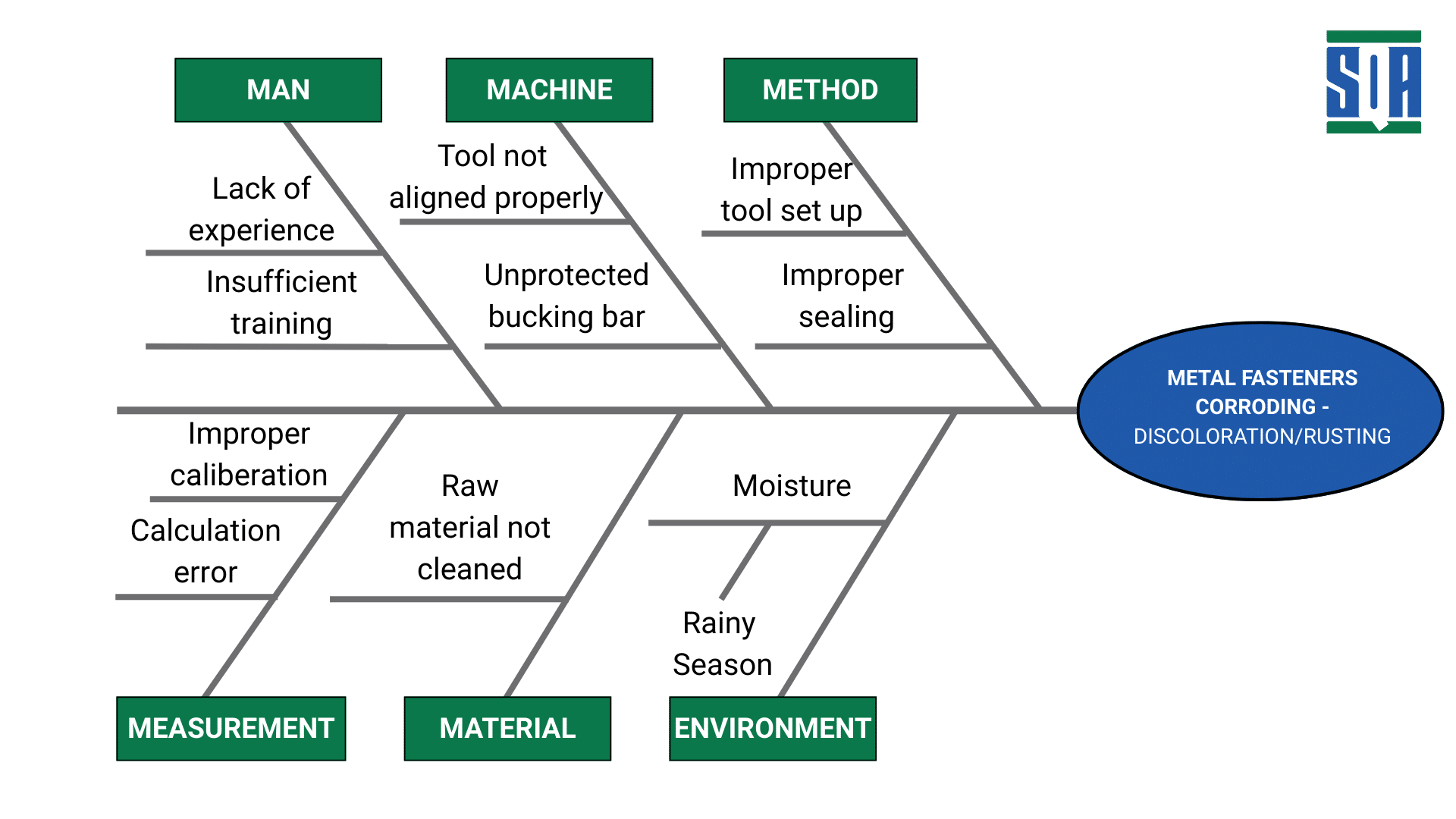
The seven categories are:
- Man (People)
- Machine
- Method
- Material
- Measurement
- Mother Nature (Environment)
- Management (System / Oversight)
At this stage of the CAPA investigation, the goal is not prioritization or solution selection. The objective is to ensure full coverage of all potential sources of influence on the failure.
Step 2: Dissecting Each Bone into Failure Mechanisms
Many CAPAs fail because teams stop at surface-level explanations such as “operator error” or “procedure not followed.” These labels describe what happened, not why it happened.
Each category must be broken down into specific failure mechanisms, which are the underlying conditions that allowed the failure to occur.
Man (People)
Rather than concluding “operator error,” the investigation should examine whether training was adequate, current, and effective. It should also assess task complexity, cognitive load, fatigue, workload, and whether operators were compensating for unstable processes.
A common failure mechanism is training that focuses on task execution without addressing critical quality attributes, leading to poor judgment during atypical conditions.
Machine
Instead of attributing failures to “equipment malfunction,” investigators should assess whether equipment was operating within validated parameters, whether preventive maintenance was effective, and whether alarms were meaningful and acted upon.
In many cases, equipment gradually drifts between calibrations, remaining within alarm limits but operating outside true process capability.
Method
“Procedure not followed” is rarely a root cause. Investigations should determine whether procedures are clear, executable, and reflective of actual practice. Undocumented workarounds and ambiguous instructions often point to deeper method weaknesses.
A typical failure mechanism is a procedure that allows multiple interpretations, resulting in inconsistent execution across operators and shifts.
Material
Labeling an issue as a “supplier problem” oversimplifies material-related failures. Effective CAPA investigations evaluate whether material variability was understood, controlled, and compatible with process capability.
In some cases, materials meet specification but exhibit variability that the process is not designed to absorb, leading to downstream failures.
Measurement
Measurement-related issues go beyond simple “measurement error.” Investigators should confirm that measurement systems are capable, acceptance criteria are objective, and data handling is robust.
A frequent failure mechanism is insufficient measurement resolution, which masks early signs of process drift until a failure occurs.
Mother Nature (Environment)
Environmental factors such as temperature, humidity, and cleanliness must be evaluated in the context of validation and routine operations.
Seasonal changes, for example, may affect material properties or process performance when environmental limits are undefined or poorly monitored.
Management (System / Oversight)
Systemic failures are often the most critical and the most overlooked. Investigations should assess whether risks are formally identified, deviations are trended, and CAPA effectiveness is verified.
A common failure mechanism occurs when recurring deviations are closed individually without trend analysis, preventing systemic correction.
Step 3: Separating Root Cause from Contributing Causes
Once failure mechanisms are identified across all seven categories, the next step is causal filtering. Each mechanism should be evaluated using three questions:
- Causality: Did this directly enable the failure?
- Necessity: Could the failure have occurred without it?
- Recurrence Control: If corrected, would recurrence be prevented?
Typically, one – sometimes two – failure mechanisms emerge as the true root cause, while several others remain contributing causes. For example, a CAPA investigation may determine that the root cause was a process design that did not account for material variability, while training gaps, weak incoming inspection, and limited statistical process control were contributing factors.
Step 4: Aligning CAPA Actions to Cause Type
A critical mistake in CAPA execution is treating all causes equally. Effective CAPA distinguishes between actions required to correct the root cause and those needed to control contributing factors.
True root causes require corrective actions such as process redesign, specification changes, control strategy updates, or validation activities. These actions address systemic weaknesses and deliver lasting impact.
Contributing causes are best addressed through preventive actions, including targeted training updates, enhanced monitoring, procedural clarifications, or temporary controls. While important, these actions should not replace correction of the fundamental issue.
Key Takeaways for Effective CAPA
A Fishbone diagram is only as effective as the depth of analysis within each category. The 7Ms provide structure and completeness, but true insight comes from identifying specific failure mechanisms. Root cause is rarely the most visible issue; it is the most fundamental one.
Organizations that treat CAPA as a structured engineering and risk-management exercise, rather than a documentation requirement, achieve more sustainable improvements. By focusing on systemic design and control gaps instead of symptoms, CAPA becomes a powerful driver of quality maturity and regulatory confidence.
Ready to Strengthen Your CAPA Program?
If your organization is experiencing recurring deviations, ineffective CAPAs, or inspection findings related to root cause analysis, SQA Services can help.
Our CAPA Managed Program is designed to provide expert support across investigations, root cause analysis, action planning, and effectiveness verification, ensuring CAPAs are thorough, defensible, and built for long-term success.
Learn more and speak with us today!